
Rocket.net
Rocket.net is one of the strongest managed WordPress hosts for sites with international traffic and busy dynamic pages. It costs far more than shared hosting and covers WordPress only, so budget and non-WordPress projects should look elsewhere.
- Cloudflare Enterprise edge caching
- Unlimited PHP workers
- Unmetered visitors
- Free WP Rocket and WP Umbrella
- Official MCP server for AI agents
Managed WordPress, Starter $1 first month monthly, or $25/mo yearly
Visit Rocket.net View offer on provider websiteStarter is $30/mo monthly or $300/yr billed annually. The $1 first month applies to monthly billing on Managed and Agency plans; yearly billing gives two months free instead. Rocket.net states it never raises prices at renewal. 30-day money-back guarantee. Prices checked November 10, 2026.
This Rocket.net review looks at a managed WordPress host that puts Cloudflare Enterprise in front of every site instead of selling it as an extra. I went through the current plans, the control panel features, the new AI tooling and the fine print so you can decide whether the premium price makes sense for your project.
Rocket.net has changed a lot in the past year. It joined hosting.com in August 2025, launched an official MCP server in May 2026 and started covering WP Umbrella for every hosted site in June 2026. All plans now advertise unmetered visitors and unlimited PHP workers. Below I explain what that means in practice, where the limits really sit and which alternatives fit better for certain budgets.
Try Rocket.net for $1 Your First Month
Every Managed and Agency plan starts with a $1 first month on monthly billing, or two months free if you pay yearly, and then bills at the same rate you signed up for. Free migrations are unlimited, so you can move a copy of your site and test it before switching DNS.
Visit Rocket.net →Rocket.net Review: Overview of the Platform
Rocket.net launched in 2020 as a WordPress-only host built on an edge-first idea. Instead of serving your pages from one data center and caching only images and scripts on a CDN, it caches full HTML pages across Cloudflare’s network. Visitors far from your origin server get pages from a nearby edge location, which is the core reason the platform feels fast worldwide.
In August 2025 Rocket.net joined hosting.com, the company formerly known as A2 Hosting. The brand kept its name, its pricing and its product team, and its founder Ben Gabler became hosting.com’s Chief Product Officer. Rocket.net now also powers hosting.com’s managed WordPress product, so the platform gained a bigger support organization and more data center locations without losing its identity.
The product range splits into three lines. Managed Hosting targets bloggers and small businesses with 1 to 25 sites. Agency Hosting runs from 10 to 200 sites with an Agency Toolkit. Enterprise Hosting gives dedicated CPU cores and RAM for large WooCommerce stores, membership sites and publishers.
Why Rocket.net Stands Out
Cloudflare Enterprise full-page caching, a web application firewall and malware protection are built into every plan with zero configuration. Unlimited PHP workers and unmetered visitors remove the two limits that usually force upgrades on other managed WordPress hosts.
See Rocket.net Plans →What Is Included on Every Plan
According to Rocket.net’s pricing page, every Managed plan includes free SSL, the Enterprise CDN, a WAF, malware protection, unlimited free migrations and automated daily backups kept for 30 days. The page also lists free WP Rocket and free WP Umbrella. PHP versions 5.6 and 7.4 through 8.4 are available per site.
The headline numbers are the ones that matter most for growing sites. Visitors are unmetered on all plans and PHP workers are unlimited. Plans are instead limited by WordPress installs, NVMe storage and monthly bandwidth, which is a fairer model when a single article goes viral or a sale brings a sudden spike.
Key Rocket.net Updates in 2025 and 2026
Many older reviews still describe Rocket.net with visit caps and fewer features, so it is worth listing what changed recently. These are the updates I confirmed on Rocket.net’s site and its partners’ announcements.
- August 2025: Rocket.net joined hosting.com and kept its brand, pricing and roadmap.
- Late 2025: a redesigned control panel arrived, with site cloning added to the interface.
- May 5, 2026: the Developer Hub and official MCP integration launched, free for all customers.
- June 1, 2026: WP Umbrella became free on every Rocket.net-hosted site.
- Current pricing: unmetered visitors and unlimited PHP workers on every plan, with PHP up to 8.4.
Rocket.net Review: Performance and Edge Architecture
Performance on Rocket.net comes from where your pages are served rather than from raw server specs alone. On a traditional host, a visitor in Sydney requesting a page from a server in Virginia waits for the request to cross the planet. With full-page edge caching, the cached HTML is returned from a Cloudflare location close to that visitor, so time to first byte stays low almost everywhere.
Rocket.net’s own figures describe full-page caching at 285+ global edge locations as of mid-2026. Cloudflare Enterprise also adds Argo Smart Routing for requests that must reach the origin, such as checkouts, logged-in sessions and wp-admin. Image optimization and Brotli compression run at the edge too, so you do not need a separate image plugin to serve lighter files.
Dynamic pages are where most edge setups break. Rocket.net’s cache rules bypass the edge for WooCommerce carts, checkout sessions and logged-in users, while still serving cached pages to anonymous visitors. That is the setup you would otherwise spend hours building with Cloudflare page rules and a caching plugin.
Unlimited PHP Workers in Practice
PHP workers decide how many uncached requests a site can process at once. Many managed hosts cap them at two to four on entry plans, so a burst of cart or search traffic queues up and starts returning 502 or 504 errors. Rocket.net lists PHP workers as unlimited on every plan, from Starter to Enterprise.
Unlimited does not mean infinite hardware. On Managed and Agency plans your sites share server resources, so heavy plugins and slow database queries still matter. The real benefit is that you are not stopped by an artificial worker count, and because the edge absorbs most anonymous traffic, the origin only handles the requests that truly need PHP.
How I Evaluated Performance
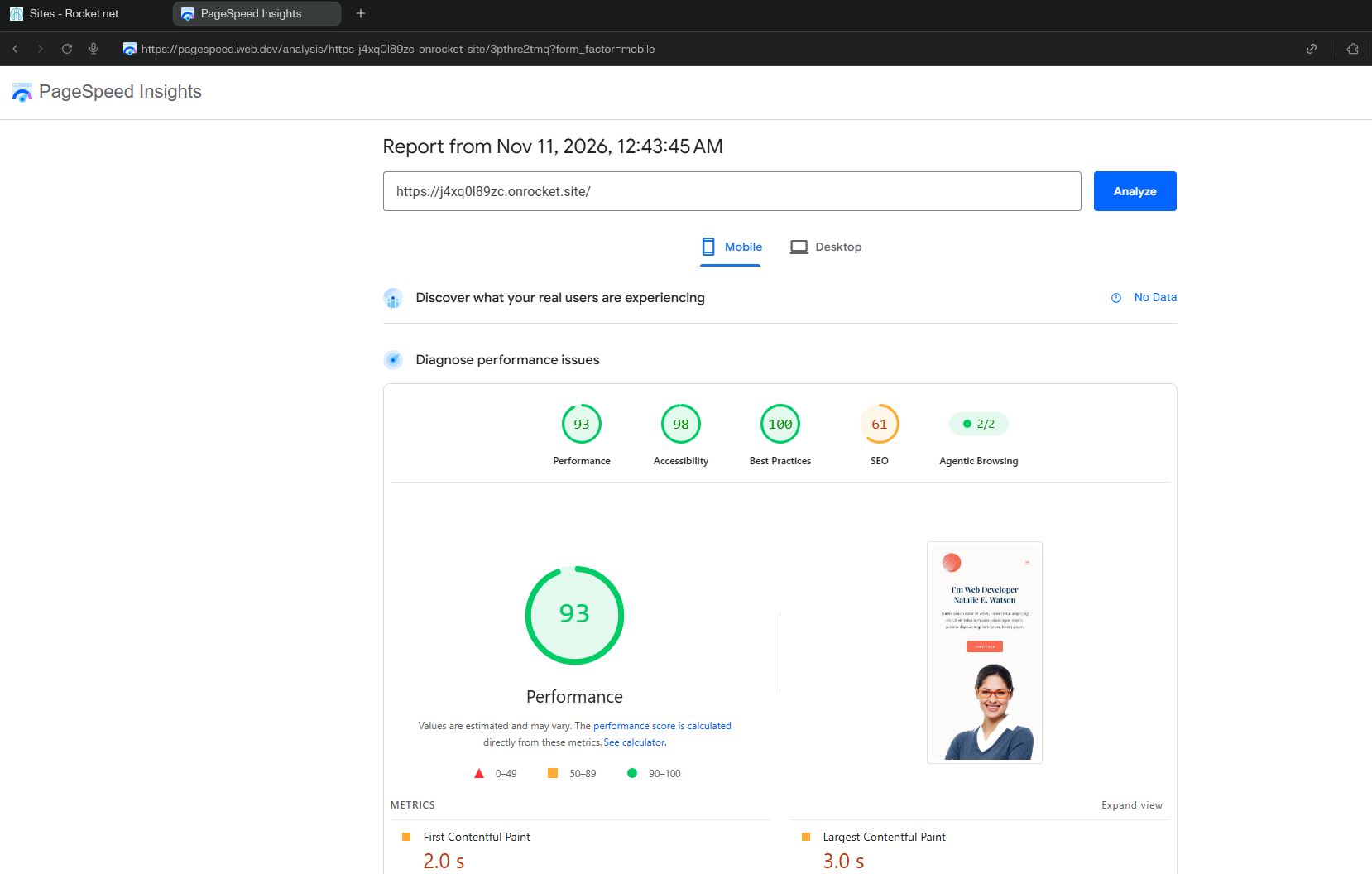
I did not run my own benchmark suite for this review, so I do not publish speed figures here. This section is based on Rocket.net’s published architecture and plan specifications, checked on November 10, 2026. The best test is your own site: use the $1 first month and free migration, then compare TTFB from several regions with a tool like KeyCDN or GTmetrix before switching DNS.
Caching and Database Layers
Rocket.net includes Redis object caching on its Managed plans at no extra cost, which helps WooCommerce and membership sites that hit the database constantly. Enterprise plans add Object Cache Pro and Relay, a faster in-memory caching layer for PHP. Those two tools often cost extra elsewhere, so they are a real part of the Enterprise value.
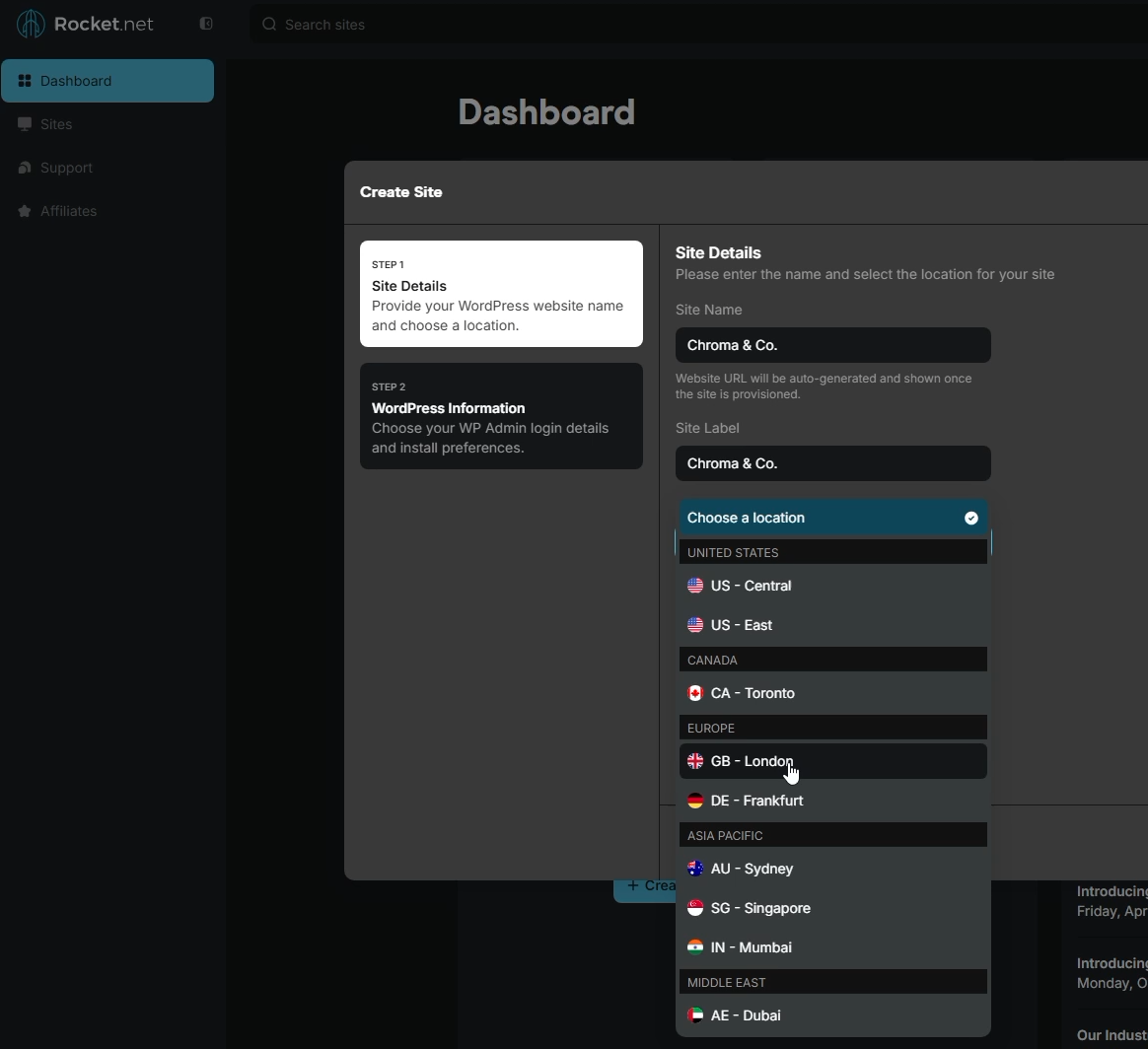
Origin servers use NVMe storage, and Rocket.net now runs in more locations thanks to hosting.com, including the USA, UK, Germany, Singapore and Australia. You choose the origin data center when you create a site. Picking the region closest to your admins and checkout customers still matters, because uncached requests always travel back to the origin.
Built-In Security Suite
Security on Rocket.net works in two layers. The Cloudflare Enterprise WAF filters SQL injection attempts, cross-site scripting, bad bots and DDoS traffic at the edge, before it reaches your server. Malware protection then runs on the origin to catch infected files and suspicious uploads.
This matters for speed as well as safety. A WordPress security plugin only acts after a request has already reached PHP and the database, so a large brute-force attack can slow the site down even when it is blocked. Filtering at the edge keeps that load away from your server entirely.
In practice, most Rocket.net users can remove plugin-based firewalls and rely on the platform instead. I would still keep strong admin passwords, two-factor login and regular updates, which WP Umbrella’s safe updates now make easier. No host can protect a site from a weak password or an abandoned plugin.
Rocket.net Pros and Cons
After going through the plans, features and terms, these are the points that would change my decision. The pros mostly come from bundling, while the cons are about price, storage and scope.
- Cloudflare Enterprise full-page edge caching included on every plan
- Unlimited PHP workers and unmetered visitors on all plans
- Rocket.net states renewal prices never increase
- Free WP Rocket and free WP Umbrella on hosted sites
- Official MCP server lets AI agents manage sites
- Unlimited free migrations and 30-day backup retention
- Starts at $25/mo billed annually, well above shared hosting
- Starter includes only 10 GB of storage and 50 GB of bandwidth
- No email hosting, so mailboxes need a separate service
- Runs WordPress only, no other apps or CMSs
Rocket.net Pricing and Plans
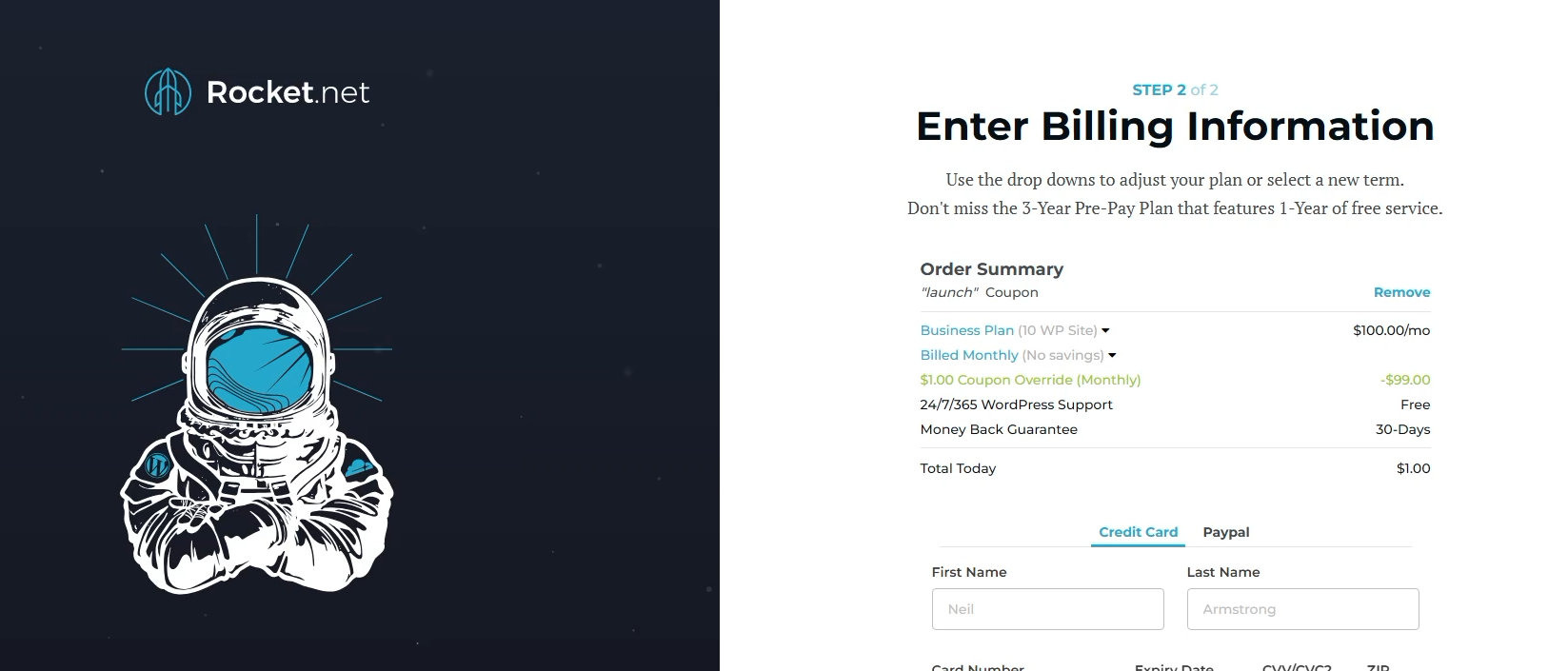
I checked every price below on Rocket.net’s official pricing page on November 10, 2026. On monthly billing, all Managed plans start with a $1 first month, then bill at the regular rate. Yearly billing skips the $1 month and gives two months free instead, and Rocket.net promises it will never raise prices at renewal, which is rare in this industry.
Renews at $25.00/mo billed annually ($30/mo monthly)
Get Starter- 1 WordPress install
- Unmetered visitors
- 10 GB NVMe storage
More features (3)
- 50 GB bandwidth
- Unlimited PHP workers
- $1 first month
Renews at $50.00/mo billed annually ($60/mo monthly)
Get Pro- 3 WordPress installs
- Unmetered visitors
- 20 GB NVMe storage
More features (3)
- 100 GB bandwidth
- Unlimited PHP workers
- $1 first month
Renews at $83.00/mo billed annually ($100/mo monthly)
Get Business- 10 WordPress installs
- Unmetered visitors
- 40 GB NVMe storage
More features (3)
- 300 GB bandwidth
- Unlimited PHP workers
- $1 first month
Renews at $166.00/mo billed annually ($200/mo monthly)
Get Expert- 25 WordPress installs
- Unmetered visitors
- 50 GB NVMe storage
More features (3)
- 500 GB bandwidth
- Unlimited PHP workers
- $1 first month
Watch the Renewal Price
The introductory rate applies only to the first term. Check the current renewal rate and billing commitment before purchasing.
On Rocket.net the introductory offer is the $1 first month on monthly billing, not a discounted multi-year term. From month two you pay the regular monthly or annual rate shown above, and the company states that rate does not rise when you renew. Annual Starter works out to $300 per year.
Agency Hosting Plans
Agency plans add the Agency Toolkit and more storage per install. Tier 1 costs $100/mo monthly or $83/mo billed annually for 10 sites, 50 GB storage and 200 GB bandwidth. Tier 3, marked as popular, costs $300/mo or $249/mo annually for 30 sites, 100 GB storage and 600 GB bandwidth.
The ladder continues up to 200 sites with 375 GB of storage and 3,500 GB of bandwidth. Per-site costs fall as you scale, so agencies with large client lists get the best value. Every Agency tier also shows the $1 first month on monthly billing, unmetered visitors and unlimited PHP workers.
Enterprise Hosting Plans
Enterprise plans give dedicated resources and start at $649/mo for 8 CPU cores, 64 GB RAM, 1 TB NVMe storage and 1 TB bandwidth. Enterprise 2 costs $1,299/mo for 32 cores and 128 GB RAM, while the top tier costs $2,599/mo for 96 cores, 256 GB RAM and 2 TB storage.
All Enterprise plans add Object Cache Pro, Relay, a private Slack channel and enterprise phone support. They make sense for stores and publishers that need guaranteed capacity rather than shared resources. For most small businesses, the Managed plans are more than enough.
WordPress Experience on Rocket.net
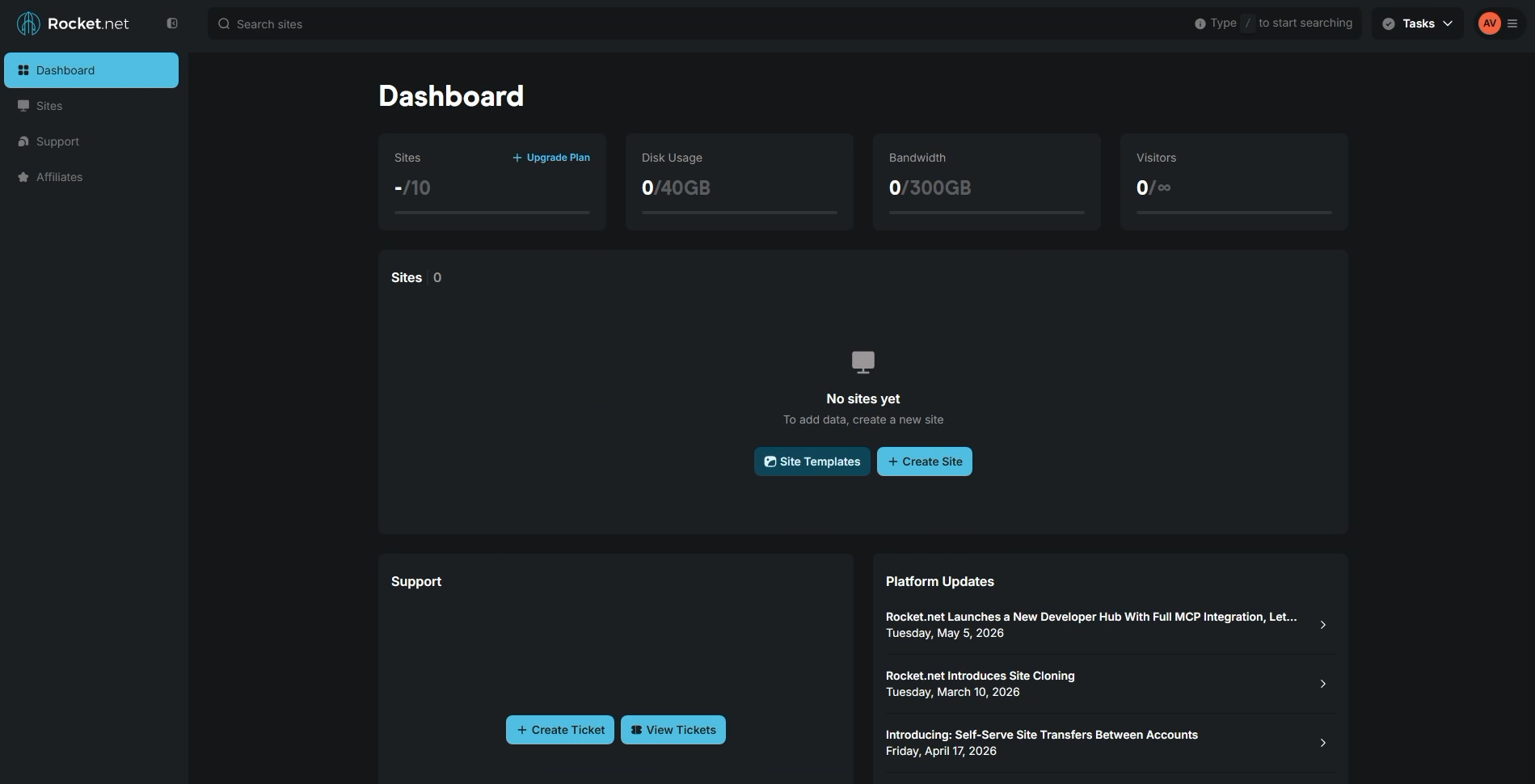
Rocket.net’s control panel is built only for WordPress, so you will not find the clutter of cPanel. Creating a site takes a name, an origin location and optional extras like WooCommerce or Multisite. The new site gets a temporary CDN domain and SSL, plus one-click SSO into wp-admin.
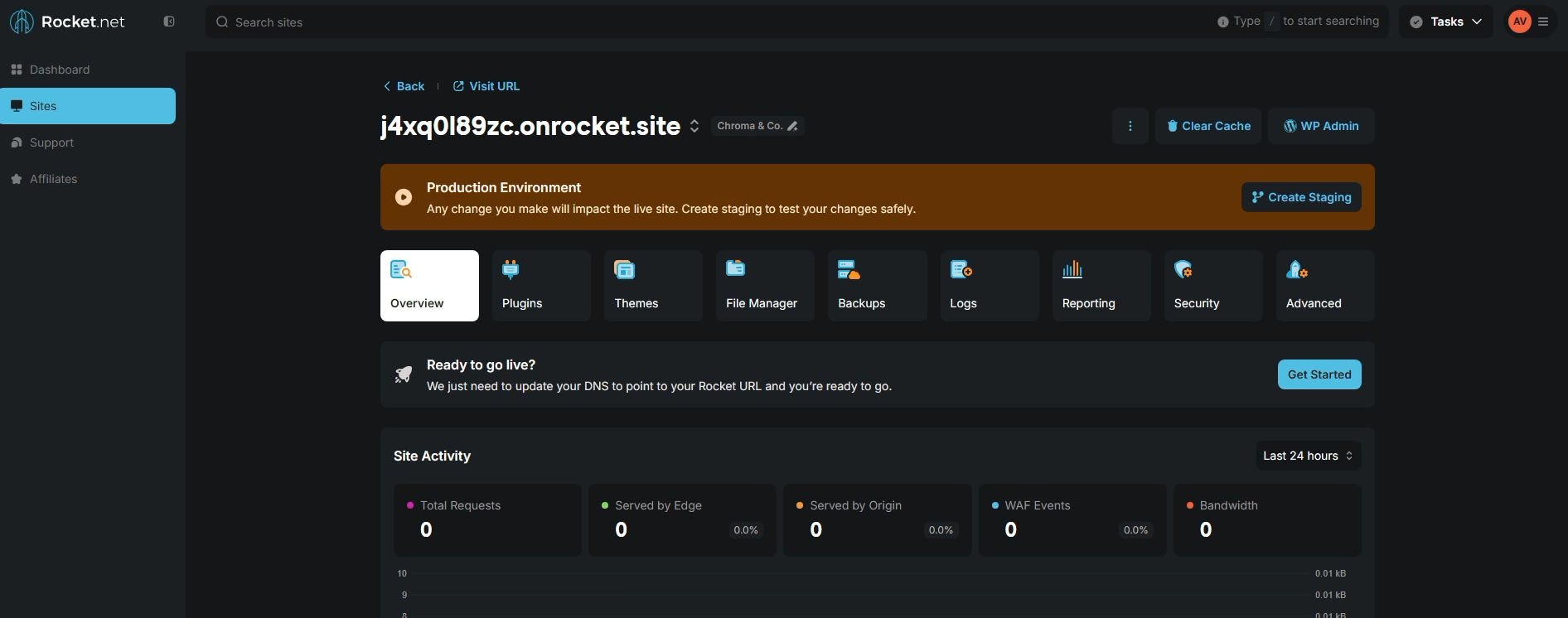
Each site dashboard has tabs for plugins, themes, a file manager, backups, logs, reporting, security and advanced settings. You can update plugins and themes from the hosting panel, purge the CDN cache and review usage without logging in to WordPress. That saves real time once you manage more than a handful of sites.
Staging, Cloning and Backups
One-click staging lets you test plugin updates and redesigns before they touch production. Rocket.net also added site cloning in the control panel, reached from the three-dot menu next to Clear Cache and WP Admin. Cloning is handy for agencies that keep a starter build and reuse it for new clients.
Automated backups run daily and are kept for 30 days on every plan. You can also create a manual cloud backup before a risky change and download a full copy. Restores happen from the Backups tab, so you do not need a backup plugin inside WordPress.
Free WP Rocket and WP Umbrella
WP Rocket is available from the Plugins tab of the dashboard without buying a separate license. Since most sites are already cached at the edge, WP Rocket mainly helps with file optimization, lazy loading and delaying JavaScript. It is a useful extra rather than a must-have on this platform.
Since June 1, 2026, WP Umbrella’s core platform is free on every site hosted on Rocket.net. That covers safe updates with rollback, uptime and performance monitoring, vulnerability scanning, backups and white-label client reports. Existing WP Umbrella customers get the credit automatically, while new users sign up with the code rocketnet2026. The Site Protect and hourly backup add-ons stay paid.
MCP Server and AI Workflows
On May 5, 2026, Rocket.net launched a Developer Hub at developers.rocket.net with full Model Context Protocol integration. It lets MCP-compatible AI assistants such as Claude, ChatGPT and Cursor work with the Rocket.net API. Rocket.net says the feature is free for all customers.
In practice you can ask an AI agent to list sites with outdated plugins, update a plugin across many sites, clone a site, clear the CDN cache or spin up a staging site. For agencies, this turns routine maintenance into a short conversation. Because these tools can change live sites, I recommend scoped tokens and a manual backup before any bulk action.
Set Up Your First Rocket.net Site the Smart Way
Pick the origin data center closest to your editors and checkout customers, since uncached requests always travel there. Then remove overlapping plugins such as separate firewall, image optimization or CDN plugins, because Rocket.net already handles those at the edge. Fewer plugins usually means faster wp-admin and fewer conflicts.
Rocket.net Support Quality
Rocket.net offers 24/7/365 support and reports a 98% customer satisfaction rate. Live chat is available from the control panel, and the team handles WordPress-level issues rather than only server problems. For a premium host, that hands-on attitude is a big part of what you are paying for.
Since joining hosting.com, Rocket.net’s support system is being extended into a shared queue staffed by both teams. That adds headcount and coverage, although it is worth watching whether response quality stays consistent as the customer base grows. Enterprise customers also get a private Slack channel and enterprise phone support.
Migrations are part of the support offer. Every plan includes unlimited free migrations, and sites are moved to a temporary URL so you can check everything before pointing your domain. That lowers the risk of switching, especially for agencies moving many client sites at once.
How the Free Migration Works
You request a migration from the control panel and share access to your current host or WordPress admin. The team copies files and the database to a temporary Rocket.net URL, where you can check pages, forms and checkout. Once you are happy, you update DNS and the site goes live with SSL already in place.
Support Verdict
Rocket.net’s support suits people who want a host that solves WordPress problems for them. With 24/7 chat, unlimited free migrations and a private Slack channel on Enterprise, it is one of the more hands-on options in managed WordPress hosting.
Rocket.net vs Kinsta vs HostArmada
Rocket.net competes most directly with Kinsta on the premium side and with HostArmada for buyers who want managed WordPress on a smaller budget. The table compares the entry plans using prices checked on each provider’s site. Kinsta’s and HostArmada’s offers change often, so confirm before buying.
| Feature | Rocket.net | Kinsta | HostArmada |
|---|---|---|---|
| Entry plan | Starter | Single 35k | Start Dock |
| Entry price | $25/mo annual or $30/mo monthly | $35/mo monthly or $350/yr | $1.99/mo on a 36-month term |
| Renewal | Same rate, no increase | Same rate | $9.95/mo regular price |
| Intro offer | $1 first month or 2 months free yearly | First month free | Up to 80% off first term |
| Monthly visitors | Unmetered | 35,000 visits | Resource based |
| PHP workers | Unlimited | Limited per plan | Shared resources |
| Full-page edge caching | ✓ | ✓ | ✗ |
| Email hosting | ✗ | ✗ | ✓ |
| Best for | Global and dynamic WordPress sites | Premium managed WordPress on Google Cloud | Budget managed WordPress |
Kinsta is the closest like-for-like rival, with a polished dashboard and Google Cloud infrastructure. Its entry plan meters visits, while Rocket.net does not, which matters for content sites with unpredictable traffic. You can read my full Kinsta review for the details.
HostArmada costs much less up front and includes email, which makes it the better choice for small sites. The trade-off is a long 36-month term for the best price and a higher renewal rate. My HostArmada review covers its plans in depth.
Rocket.net Rating
Rocket.net does not have a score in our editorial rating system yet, so I am not giving it a numeric rating in this review. Instead, here is how it compares on the five areas I score every host on.
- Performance: excellent for global audiences thanks to full-page Cloudflare Enterprise caching and unlimited PHP workers.
- Support: strong, with 24/7 chat, free migrations and WordPress-level help.
- Value: good for revenue sites and agencies, weaker for small hobby sites because of the entry price.
- Features: very strong, including free WP Rocket, free WP Umbrella, staging, cloning and an MCP server.
- Ease of use: very easy, with a WordPress-only control panel and almost nothing to configure.
Who Should Use Rocket.net
Rocket.net makes the most sense when your website earns money and speed or uptime directly affects revenue. These are the three groups that get the most out of it.
WooCommerce Stores and Membership Sites
Stores and membership sites generate a lot of uncached traffic from carts, checkouts and logged-in users. Unlimited PHP workers, Redis object caching and smart cache bypass rules keep those pages responsive during sales. Larger stores can move to Enterprise for dedicated CPU and RAM.
Sites With an International Audience
If your readers come from several continents, full-page edge caching is the single biggest speed upgrade you can make. Visitors get pages from a nearby Cloudflare location instead of waiting for a distant server. Publishers and SaaS marketing sites benefit most.
Agencies Managing Many Client Sites
Agency tiers, site cloning, free WP Umbrella and the MCP server cut a lot of maintenance work. White-label client reports from WP Umbrella and bulk updates through AI agents can replace several paid tools. The per-site cost also drops as you move up the tiers.
Who Should Skip Rocket.net
Beginners launching a hobby blog with no revenue will find $25 to $30 per month hard to justify. A budget host like one of the cheap hosting picks is a better starting point until traffic grows.
Anyone who needs email hosting, a non-WordPress app or a custom server stack should also look elsewhere. Rocket.net runs WordPress only and does not include mailboxes, so you would need extra services or a VPS for those needs.
Best Rocket.net Alternatives
Rocket.net is a strong choice, but it is not the best fit for every budget or setup. These alternatives win for specific needs, ranked by our editorial scores and use-case order.
Best Rocket.net Alternatives in 2026
Ranked by editorial score and use case



HostArmada is my pick for budget managed WordPress, especially for single sites that also need email. Kinsta suits teams that want premium managed hosting with a mature dashboard and are fine with visit-based limits. Cloudways fits developers who want to choose their own cloud provider and manage server sizes themselves.
For a broader comparison, see my guide to the best WordPress hosting, which covers more providers and use cases.
Final Verdict: Is Rocket.net Worth It?
Rocket.net is worth it if your WordPress site earns money, serves visitors in several regions or runs WooCommerce. You get Cloudflare Enterprise edge caching, a WAF, unlimited PHP workers and unmetered visitors without paying for add-ons. The free WP Rocket and WP Umbrella licenses add real savings for agencies.
The limits are clear and fair. Storage on the entry plans is modest, there is no email hosting and it is far more expensive than shared hosting. If those points do not affect you, the $1 first month and free migrations make it easy to test on your own site.
My Bottom Line
Rocket.net is a top choice for edge-cached managed WordPress, especially for stores, publishers and agencies with global traffic. Budget sites and anyone needing email or non-WordPress apps should choose a different host.
Test Rocket.net on Your Own Site
Start any Managed or Agency plan for $1, ask the team to migrate a copy of your site and compare speed from several regions before you change DNS. The 30-day money-back guarantee covers you if it is not the right fit.
Visit Rocket.net →Frequently Asked Questions
Is Rocket.net good for WordPress?
Yes, Rocket.net is one of the strongest managed WordPress hosts for performance and security. It includes Cloudflare Enterprise full-page caching, a WAF, malware protection and unlimited PHP workers on every plan.
How much does Rocket.net cost per month?
Rocket.net starts at $30/mo on monthly billing or $25/mo billed annually for the Starter plan with one site. Pro costs $60/mo or $50/mo annually, Business $100/mo or $83/mo, and Expert $200/mo or $166/mo. Monthly plans start with a $1 first month, while yearly plans get two months free.
Does Rocket.net raise prices at renewal?
No, Rocket.net states that it never raises prices at renewal. The monthly or annual rate you sign up at is the rate you keep, which is rare in web hosting.
Does Rocket.net limit monthly visitors?
No, visitors are unmetered on all current Managed, Agency and Enterprise plans. Plans are limited by WordPress installs, storage and bandwidth instead.
Does Rocket.net include email hosting?
No, Rocket.net does not host email inboxes. You will need a separate service such as Google Workspace or Microsoft 365 for your domain email.
Is WP Umbrella really free on Rocket.net?
Yes, since June 1, 2026, the WP Umbrella core platform is free on every site hosted on Rocket.net. New users sign up with the code rocketnet2026, while existing customers receive the credit automatically. The Site Protect and hourly backup add-ons remain paid.